
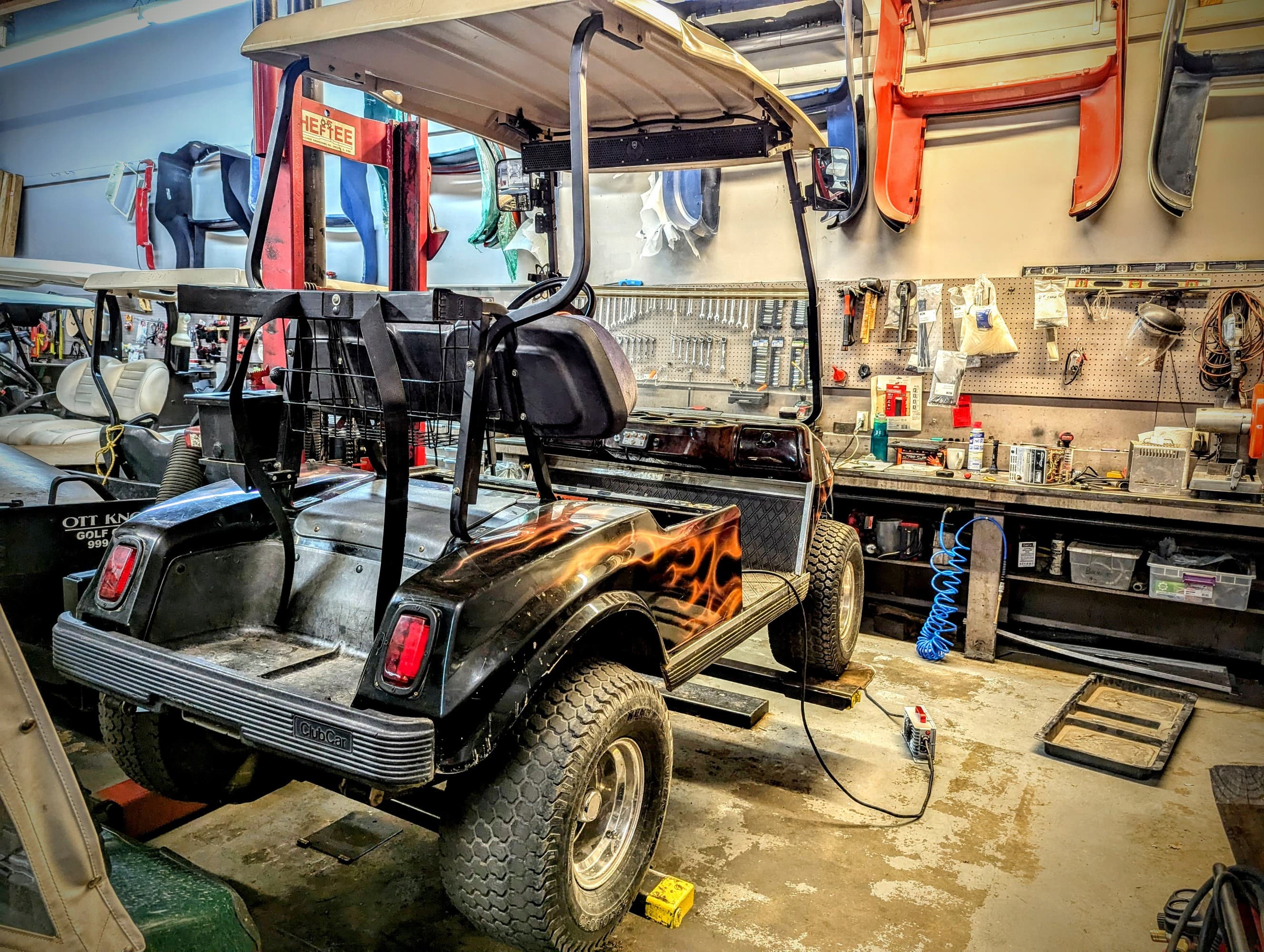
Custom Golf Cart Wheel and Tire Packages Popular in Austin TX
Wheels and tires are one of the most impactful customization decisions a golf cart owner can make, and they tend to get less attention than they deserve. The right combination affects ground clearance, handling on different surfaces, how the cart looks, and whether other modifications are needed to make the setup work properly. Buyers who think about this early end up with a setup they're still happy with a year later. Buyers who treat it as an afterthought sometimes find themselves wanting to change things after the fact.
At Golf Carts of ATX, we offer a tire and wheel builder that lets buyers work through options before committing to a direction. It's one of the most-used customization tools we offer, and the variety of setups we've built across the Austin area gives us a clear picture of what works and what buyers actually end up liking once they're using the cart regularly.
Why the Tire and Wheel Choice Matters More Than Most People Think
Tire size and wheel choice do more than change the look of the cart. Increasing tire size beyond a certain point requires a lift kit to prevent rubbing against the cart body, which means the tire decision and the lift decision are connected. A cart that's been lifted and outfitted with larger tires handles rough terrain noticeably better than a stock setup, but it also rides differently on pavement. That trade-off is worth understanding before you start selecting.
The wheel choice adds another layer. Low-profile wheels with smooth tires are common for buyers who primarily use their cart on paved neighborhood roads. They look clean and handle predictably in suburban driving conditions. Larger, more open wheel designs with all-terrain tires are popular with property owners who want the cart to look as capable as it actually is. Neither approach is wrong; they're right for different use cases. The decision that causes regret is picking one when you actually needed the other.
What Austin Cart Owners Are Choosing
In the work we do across the Austin area, a few patterns stand out. For neighborhood carts in suburban communities such as Lakeway, Cedar Park developments, or master-planned neighborhoods around Georgetown and Round Rock, buyers consistently lean toward cleaner, road-oriented setups. Low-profile tires on styled wheels that complement the cart's color or body work look sharp on neighborhood streets and wear well on pavement.
For property owners and buyers who need genuine off-road capability, lifted carts with all-terrain tires are the most common request. A moderate lift paired with a quality all-terrain tire gives the cart real utility on gravel paths, ranch access roads, and uneven terrain. We cover what buyers across the Austin area are requesting most often in our look at the most popular cart upgrades. Tire and wheel changes land near the top of that list consistently, often paired with lift kits.
How Lift Kits and Tires Work Together
A lift kit is what makes room for larger tires. Without one, going up significantly in tire size causes the tires to contact the cart body during turns or when the suspension compresses, which damages both the tires and the cart. Lifting the frame creates the clearance needed for larger tires to operate without interference.
How much lift you need depends on the tire size you're targeting. Mild tire upgrades sometimes work within a stock setup; more significant size increases require a proper lift install first. We handle lift kit installation as part of our custom build work, and we always walk buyers through whether the tire setup they want requires a lift before they commit to a direction. That prevents the situation where someone gets a new tire and wheel package installed and then discovers the lift should have come first. If you want to understand what goes into a full custom build, we cover that in detail separately.
Street Legal Considerations for Custom Tire Setups
If the cart is registered as a street legal LSV, or you plan to register it, the tire and wheel configuration becomes part of a broader picture. Very large tires on a high lift setup create a higher center of gravity that behaves differently than a stock cart on streets, particularly during turns or when navigating intersections and crossings in mixed-traffic areas.
There's also a practical wear consideration. All-terrain tires designed for off-road use wear faster on pavement than tires designed for road use. If the cart is primarily a neighborhood vehicle that spends most of its time on residential streets, tires sized for road use will outlast an all-terrain setup by a meaningful margin. For buyers who need both street legal registration and some off-road capability, a moderate setup that bridges both is a conversation worth having. Our guide to what makes a cart road-legal in Austin covers the full LSV equipment picture if you want to understand where tires fit within the broader requirement.
Using Our Tire and Wheel Builder
The tire and wheel builder on our website gives buyers a way to start exploring options before coming in or committing to anything specific. It's designed for buyers who have a general direction in mind but haven't worked through the details. The tool helps narrow down what a setup would actually look like on a cart similar to yours.
Where the tool has limits is in the practical knowledge of how specific combinations perform in Austin-area use cases. That's where a conversation with our team adds value. We've built a lot of these setups, and knowing that a particular tire and wheel combination works well for a specific type of property or neighborhood condition isn't something an online configurator fully captures. Come by the showroom or reach out through the website if you want to talk through what the right combination looks like for your situation.
Matching the Setup to How You Actually Use the Cart
The most useful question to answer before selecting anything is simple: how are you actually going to use this cart? Daily neighborhood driving, weekend property use, occasional off-road trips, or a mix of those things leads to meaningfully different recommendations.
Buyers who use a cart daily in a community setting prioritize ride quality on pavement and tire longevity. Property owners prioritize ground clearance and terrain capability. Buyers who want a head-turning neighborhood cart prioritize aesthetics while keeping the setup practical for road use. None of these is the wrong answer, but the setup that works for one doesn't automatically work for the others. Take a look at what we have in our shop to see available starting configurations, then reach out about what you'd want to build from there.