
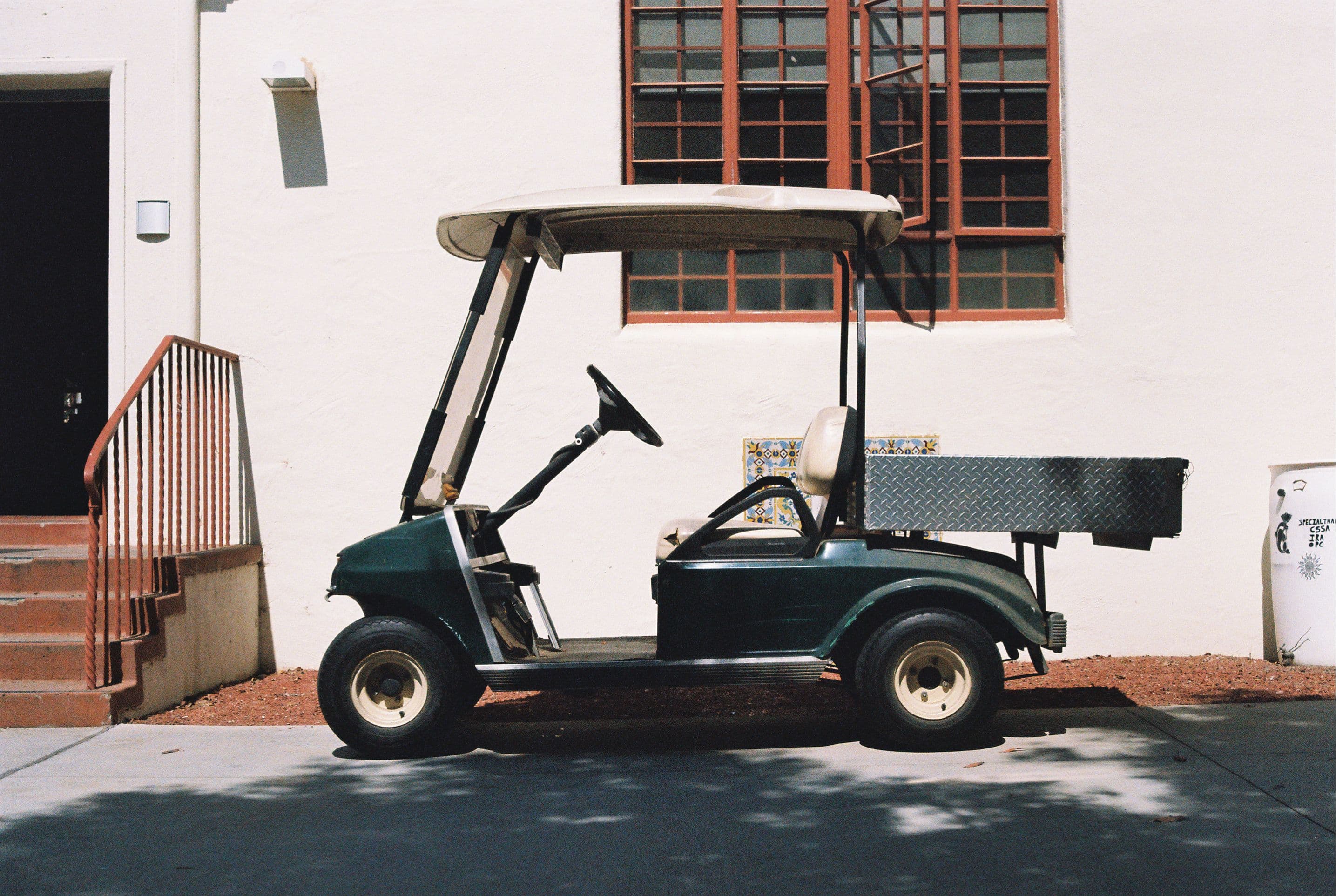
Most purchasers make this decision once they choose that they want a street legal golf cart for getting about their neighborhood, local errands or just getting around the Austin region without needing a full size vehicle. The only decision is to select between an electric or gas-powered model. The choice of the proper one depends on driving habits, topography, maintenance preferences and ownership expenses, so working with professional golf cart specialists can make the process easier.
At Golf Carts of ATX we have electric and gas powered carts. We aren’t looking to point purchasers to this or that but rather get a sense of how the cart will be used and what’s most important to the owner. A more detailed review of the disparity between those two possibilities can help lead to a simplified selection and make it easier to select a model that matches everyday needs.
Street-Legal Requirements: Does the Power Source Matter?
For registration purposes, the power source does not change what is required. Both electric and gas carts can be registered as LSVs (Low Speed Vehicles) in Texas, provided they have a VIN, headlights, taillights, turn signals, mirrors, and seatbelts.
The same $20 DMV registration fee applies to both. The same road restrictions apply to both: roads posted at 35 mph or under. A registered gas cart and a registered electric cart operate under identical rules once the license plate is on.
Where the power source matters is in day-to-day performance, cost of ownership, and how the cart handles on Austin's varied terrain. That is where the comparison gets practical.
Performance on Austin Roads and Terrain
For flat terrain, paved neighborhood streets, and golf cart paths, a standard 48V electric cart handles everything without strain. The ride is quiet, power delivery is smooth, and range is more than adequate for typical neighborhood use.
The picture changes on hilly terrain. Hill Country subdivisions, lakefront properties with elevation changes, and neighborhoods with sustained grades put more demand on the drivetrain. A standard 48V electric cart can lose power noticeably on steep or extended inclines. A 72V electric cart handles those conditions without the drop-off. Gas carts have more torque at lower speeds and handle hills reliably, though they are louder and carry more maintenance requirements.
For Austin's central and eastern neighborhoods, a 48V electric cart is more than adequate. For buyers in the Hill Country or on elevated terrain, a 72V electric or a gas cart is worth the additional consideration before purchasing.
Cost Comparison: Electric vs Gas
Upfront, electric and gas carts are comparably priced. Entry-level carts start at $3,995 for both types. High-performance 72V electric models carry a premium over standard electric and comparable gas configurations.
The real cost difference shows up in ongoing operation. Electric carts run on electricity, which costs significantly less than gasoline over thousands of miles of use. No oil changes, no fuel costs at the pump, no engine components wearing out at regular service intervals.
Gas carts cost more to run month to month. They require oil changes, fuel, spark plug replacements, and periodic engine maintenance. For buyers using the cart daily or several times per week, that difference accumulates meaningfully over a few years.
Battery replacement is a cost specific to electric carts. Lead-acid batteries need replacement every 3 to 5 years, starting at $191 per battery for a 6V unit. Lithium batteries last 7 to 10 years, with full kits ranging from $2,162 to $3,765 depending on voltage and capacity. The higher upfront cost of lithium translates to a lower per-year ownership cost over a 10-year window compared to replacing lead-acid packs multiple times. Our battery upgrade page covers the full comparison.
Maintenance Differences Between Electric and Gas
Electric carts have fewer moving parts. No oil, no fuel filter, no spark plugs, no carburetor. The primary maintenance task for lead-acid battery electric carts is monthly water level checks in each cell. Lithium battery carts require no routine maintenance at all beyond keeping the cart charged.
Gas carts follow a maintenance schedule closer to a small engine. Oil changes every season or after a set number of operating hours. Spark plug inspections. Air filter checks. Fuel system attention. These are manageable tasks for someone comfortable with basic small-engine upkeep, but they add up in time and cost across years of regular use.
For buyers who want to charge it and ride without a maintenance checklist, electric is the direct choice. For buyers who are comfortable with periodic engine maintenance and prioritize refueling flexibility over charging infrastructure, gas remains a practical option.
Which Is Better for Street-Legal Use in Austin?
For the majority of Austin buyers driving in neighborhoods, running short errands, and navigating flat to moderately hilly terrain, electric is the better fit. It is quieter on residential streets, costs less to operate over time, and requires less ongoing maintenance. A 72V model addresses the more demanding terrain that a standard 48V cannot.
Gas makes sense for buyers who need extended range on a single fill-up, operate the cart on large properties where charging access is limited, or have a strong preference for a gas-powered drivetrain.
The right answer depends on how the cart will actually be used. There is no universal winner here. Our team has been helping Austin buyers work through this decision since 2020, and we are not going to point you toward one option before understanding your specific situation.
Our Recommendation for Austin Buyers
If you are driving primarily in an Austin-area neighborhood or HOA community on paved paths and moderate terrain, go electric. The quiet ride, lower operating cost, and minimal maintenance requirements are the right fit for that use case. If your property has significant elevation changes or you need the cart for a large rural property where charging stations are not always accessible, the conversation about gas or a high-voltage electric model is worth having.
We hold a 4.7/5 rating on Google from 81+ reviews and have served 1,000+ customers across Texas and nationwide. Every cart we sell carries a 3-year bumper-to-bumper warranty covering parts, labor, and transport. Financing is available with a soft credit pull.
Browse our full inventory to see electric and gas options currently in stock. To apply for financing before visiting, head to our financing page.
Related Topics: