
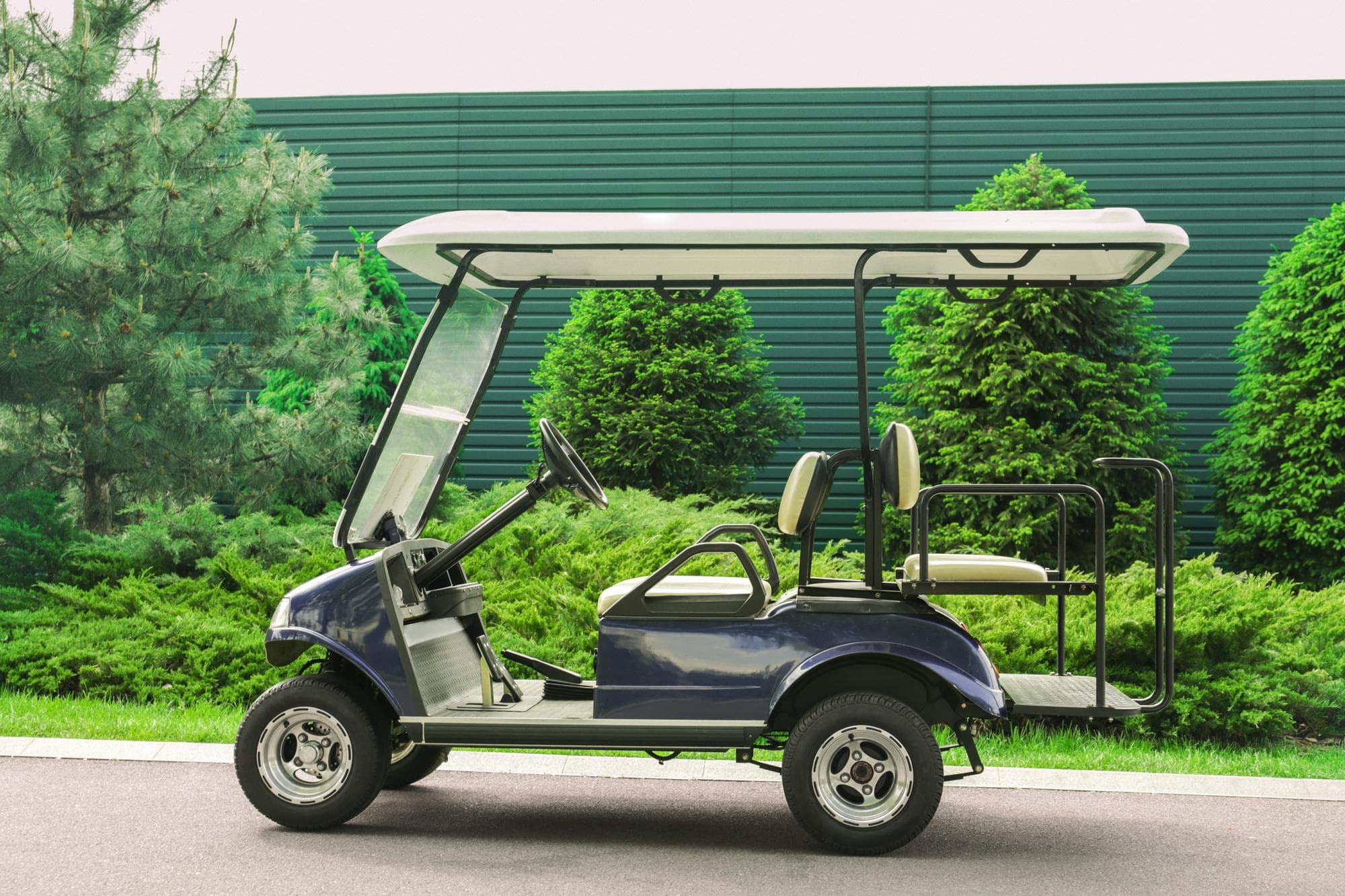
Lifted golf cart builds take more planning than most people expect. The lift part? That's actually the easy bit. What gets tricky is how the lift, the suspension, and the tires all start talking to each other once they're on the same cart.
And then there's the question of how the cart's actually going to be used. That matters a lot more than people think. A cart built for a big open property is kind of a different animal from one that needs to handle tighter terrain or street use. You know, the use case shapes everything.
At Golf Carts of ATX, our trusted golf cart services have covered enough of these builds to know where things go sideways. Some decisions just get underestimated. A setup that looked great on paper can create real headaches once the cart hits the road or starts working the property daily.
We've seen it enough times to know what questions to ask before a single part gets ordered. That upfront conversation, maybe a bit longer than you'd expect, is honestly what separates a build you love from one you keep bringing back in.
What Goes Into a Lifted Build
A lifted golf cart build starts with the lift kit, but it rarely ends there. The lift raises the cart's frame relative to the wheel assembly, which creates additional ground clearance. That clearance is what makes a lifted cart handle rough paths, uneven terrain, and the kind of half-paved surfaces that show up throughout the Austin area.
Most lifted builds also involve a tire and wheel change. Stock golf cart tires are sized for a standard-height cart, and once ride height changes, the tire and wheel combination usually changes with it. The right tire choice affects how the cart looks, how it handles, and how it holds up under the conditions it faces day to day.
The suspension system is what holds the whole build together. A quality lift uses a suspension kit matched to the specific cart platform, not a generic adapter. Different cart models have different suspension geometries, and a lift that isn't engineered for the platform creates handling characteristics that show up the moment the cart is on the road. We look at all three elements, lift, tires, and suspension, before making any recommendations because each decision shapes the others.
Lift Kits and What They Change
The lift kit changes the cart's ride height by creating space between the frame and the wheel assembly.
What we tell customers upfront is that the lift changes more than the look. Raising the center of gravity affects how the cart handles through turns and over uneven ground. A cart that was stable on flat pavement handles differently after a lift, particularly when the tire width doesn't match the new ride height. That's why we look at the lift and tires together rather than as separate choices.
The ground clearance gain is the practical benefit most customers are after. For anyone using a cart on rough terrain, hill approaches, or unpaved paths, that additional clearance makes a real difference. For customers who want the lifted look on a cart that stays primarily on pavement, the build approach is somewhat different, and we'll design the configuration accordingly.
Tires and Wheels on a Lifted Cart
Tire selection is one of the most consequential choices in a lifted build. Bigger tires increase the cart's effective rolling diameter, which changes the ground covered per wheel rotation. That affects how the cart feels at speed and, in some cases, the actual speed the cart achieves on its existing motor and controller configuration.
We run a tire and wheel builder at Golf Carts of ATX because there is no single correct answer for every customer. A cart used on golf-cart-legal neighborhood streets has different needs than a cart running the same lift on a working ranch. Tread pattern, tire width, and sidewall height all factor into how the cart performs in the conditions it faces.
Wheel selection matters beyond aesthetics. Offset, backspacing, and diameter affect how the tire sits relative to the fender and frame once the lift is installed. A wheel that looks right on paper can create clearance issues once it's mounted on a specific cart with a specific lift kit. We check fitment before anything is ordered.
Tire upgrades on a lifted build also interact with street legal requirements for customers who need their cart road-legal. Larger tires can push top speed outside the 20-to-25-mph range required for Low Speed Vehicle classification in Texas. That's something we account for during build planning.
How the Build Affects Performance
A lifted build changes how the cart performs in specific, predictable ways, and it's worth being direct about all of them.
Ground clearance improves. That's the purpose of the lift, and it delivers. A cart that previously scraped on steep driveway entries or got hung up on rough terrain handles those situations better with a properly executed lift.
Handling changes. The center of gravity rises with the cart, which means it behaves differently in turns and on side-slopes compared to the stock configuration. With a well-matched lift and tire combination, this is a manageable characteristic, not a defect. It's worth knowing before the build is finalized.
Speed can change with larger tires. More distance per wheel rotation means higher top speed, and that has real implications for customers keeping their carts street legal under Texas LSV requirements. Speed calibration after a tire change may be part of the build process, and we plan for that.
Comfort on paved roads can shift with aggressive off-road tires. Customers who plan to use the cart mostly on pavement sometimes choose a tire that balances off-road capability against on-road ride quality, rather than committing fully to either end of the spectrum.
How Our Build Process Works
At Golf Carts of ATX, custom lifted builds start with a conversation about how the cart is going to be used. That drives every decision after it.
We carry lift kits, handle the tire and wheel configuration through our builder, and install street-legal light packages for customers who need their lifted cart to stay road-legal. The build can happen on a cart purchased through us or on a cart a customer already owns. We work on E-Z-GO, Club Car, Yamaha, ICON, Evolution, and Coleman Powersports platforms.
Builds are scheduled through our Austin location. For customers who want to configure a custom lifted build on a new cart, we walk through the full configuration before anything is committed. The goal is for the finished cart to match what the customer had in mind before work began.
What Else Can Be Added to a Lifted Build
Customers committing to a lifted build often add other modifications at the same time, since the cart is already being worked on.
Sound systems are a common addition, particularly for neighborhood and recreational use. Street-legal light packages are frequently paired with a lift for customers who need the cart to qualify for on-road registration. A battery upgrade is worth considering during a build as well, particularly if the existing pack is aging or if a sound system will add to the electrical load the battery handles daily.
Golf Carts of ATX handles new cart sales, custom builds, battery upgrades, and mobile repair through the same shop. A customer can purchase a cart, lift it, have it serviced over the years, and upgrade the battery without switching providers. That's a practical reality for anyone planning to own a cart for the long term.
Related Topics: