
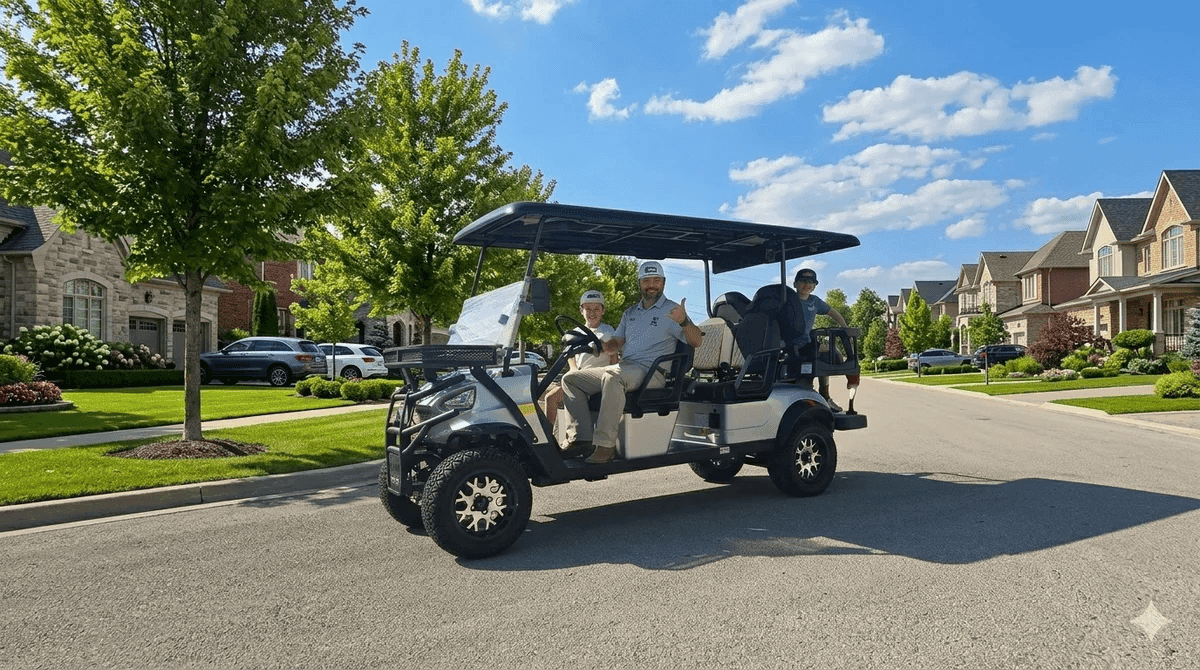
Best Neighborhoods in Austin TX for Street Legal Golf Cart Living
Austin and its surrounding communities have quietly become one of the better metro areas in Texas for street legal golf cart living. It's driven by a combination of things: rapid suburban growth that's produced master-planned communities with residential-scale road networks, the expansion of golf course neighborhoods across the outer suburbs, and an openness to alternative neighborhood transportation that fits the city's general character. For buyers considering whether a golf cart is a practical daily vehicle rather than just a recreational toy, the answer depends heavily on which neighborhood they're in.
At Golf Carts of ATX, we've sold and serviced carts across the entire Austin metro since early 2020, and we have a real sense of which communities have made golf cart living work. Our neighborhood service pages cover the communities we actively serve. Here's a breakdown of where street legal cart ownership makes the most practical sense today.
What Makes a Neighborhood Actually Work for Golf Cart Living
The foundational requirement is road design. A neighborhood where cart living works has lower-speed residential streets, posted at 35 mph or under, that connect to the places residents actually want to go: a mailbox cluster, a community pool, a school, a park, or a nearby shopping area. The more daily errands that can be handled without touching a road above that limit, the more practical a cart becomes as a real vehicle rather than just a fun option for the occasional afternoon.
Beyond the road network, existing cart culture in a neighborhood matters more than most buyers realize. In communities where carts are already common, drivers on residential streets are used to sharing the road. Cart-friendly habits develop organically: people slow down at crossings, look for carts in driveways before pulling out, and generally treat them as part of the traffic mix. It's also worth understanding what street legal cart ownership involves from a legal standpoint before settling on a neighborhood, since registration and equipment requirements apply regardless of where you live.
South Austin and Southeast Communities
South Austin is where we're based, and it's where we have the deepest knowledge of cart ownership patterns and road conditions. Several communities in this part of the city have the residential street design that makes cart use feel natural rather than awkward.
Yarrabee Bend and Bergstrom Village are two South Austin communities where we've built a consistent customer base. Buyers in both areas tend to use carts as genuine daily vehicles for local trips rather than weekend toys, which tells you something about how well the local road network supports that kind of use. Bluff Springs follows a similar pattern, with newer residential development and road design that accommodates lower-speed vehicles well.
Moore's Crossing and Pilot Knob are growing Southeast Austin communities where we've seen meaningful increases in cart ownership over the past few years. The newer housing in these areas tends to be built around community amenities like pools, parks, and green space, all within easy cart distance for most residents. That's the kind of infrastructure that makes daily cart use feel obvious rather than effortful.
Georgetown, Round Rock, and the North Austin Corridor
The communities north of Austin have seen some of the fastest residential growth in the state over the past decade, and several of the master-planned neighborhoods that have come out of that growth are genuinely excellent environments for golf cart living. Road networks in these developments tend to keep residential traffic well-separated from arterials, internal speeds are low, and community amenities are typically accessible without touching a main road.
McKinney is a good example of this pattern, a planned community where the internal road design and layout make a golf cart genuinely useful for daily neighborhood travel. Georgetown and Round Rock more broadly have seen a real uptick in cart ownership across multiple neighborhoods, driven partly by the golf course communities that anchor some of the larger developments in the area. Our mobile repair team covers Georgetown and Round Rock directly, so buyers in this corridor have the same access to technician service as customers closer to our showroom.
Lakeway and the Hill Country Communities
Lakeway is probably the most established golf cart community in the greater Austin area, and the gap between it and most other communities is real. Golf carts have been part of daily life in Lakeway long enough that the culture, the infrastructure, and the road habits of other drivers have all developed around it. For someone new to golf cart ownership, moving into Lakeway and finding that carts are just a normal part of the traffic mix is a meaningfully easier introduction than starting from scratch in a neighborhood where carts are still unusual.
The Hill Country communities west of Austin that have developed around and beyond Lakeway share some of that culture, particularly in neighborhoods built around golf courses or lake access. The mix of residential street access and adjacent property use in this corridor also suits buyers who want a cart that handles both neighborhood driving and occasional off-road use. If you're thinking about that kind of dual-use setup, our guide to off-road vs. street legal configurations covers the build considerations.
Cedar Park and Pflugerville
Cedar Park and Pflugerville are both major suburban growth areas north of Austin, and while not every street in either city is designed for cart use, the residential neighborhoods built within larger planned developments often have exactly the internal road network that makes cart living work. Buyers in both cities increasingly view a cart as a supplement to car ownership, something that handles the short neighborhood trips that don't justify taking a car out.
We cover both cities in our mobile service area, which means buyers here have ongoing technician access without hauling a cart anywhere. For buyers who are newer to the area or still figuring out whether their specific neighborhood supports daily cart use, the best thing to do is map out your most common local routes and check the posted speed limits on every road and crossing you'd use.
Finding the Right Cart for Your Neighborhood
The community you're in shapes which cart makes the most practical sense. A flat suburban neighborhood with paved roads calls for something different from a hilly area or a property that mixes paved and unpaved terrain. New carts from our shop start at $3,995, and we carry electric and gas models in 2-seat, 4-seat, and 6-seat configurations.
If you're not sure which direction fits your neighborhood, come by the showroom or reach out through the website. We've helped buyers across every part of the Austin metro work through this, and knowing which communities we serve gives us useful context for what tends to work well in which areas.