
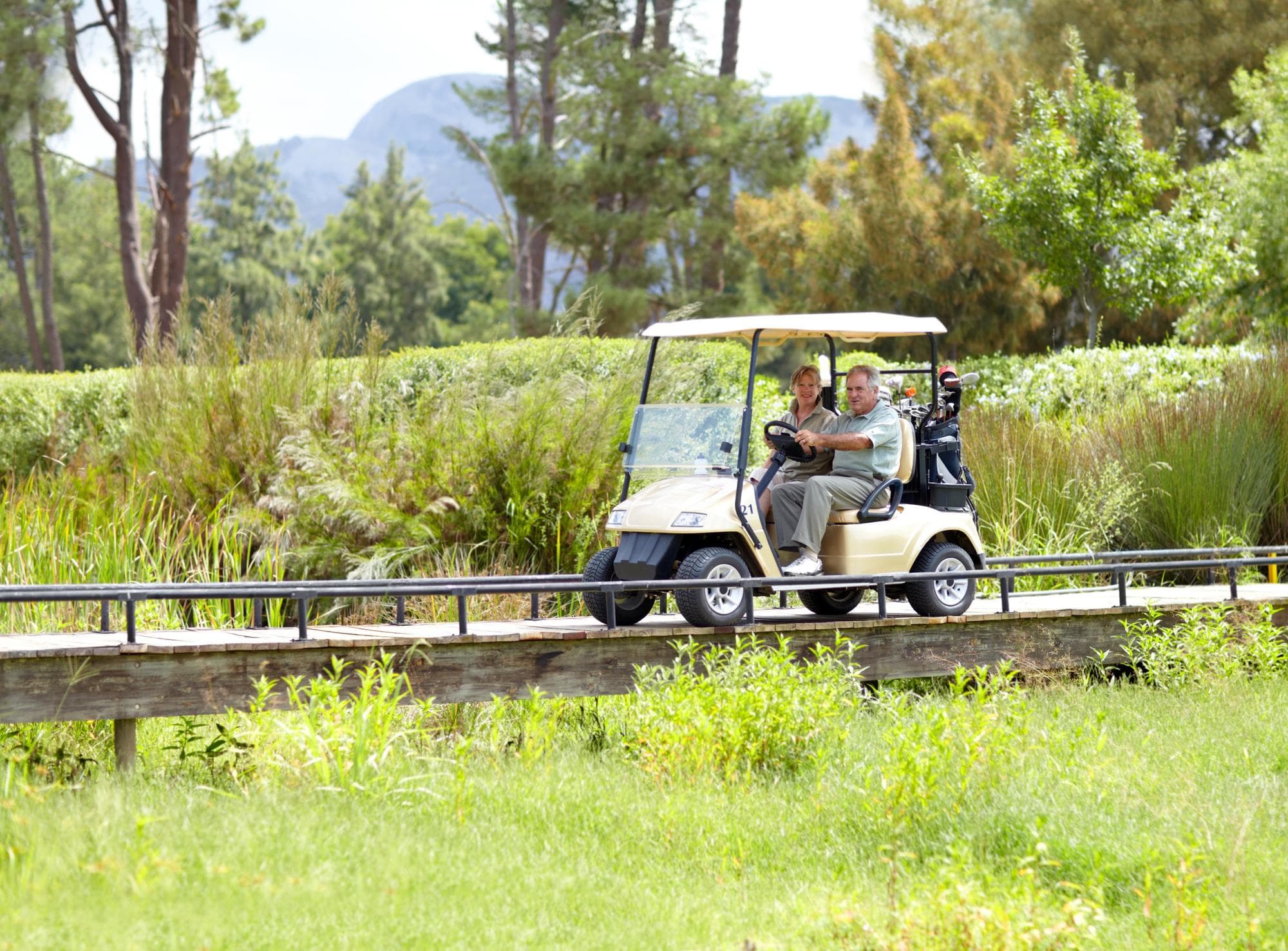
Austin summers are not gentle. Not even a little bit. Triple-digit temperatures from June through September, long hours of direct sun, and roads that go from smooth neighborhood pavement to cracked caliche, sometimes in the same stretch, all put real stress on a golf cart. A cart that runs fine in milder conditions can show its limits pretty fast out here.
You know, it's not just about the heat either. It's the combination of things. The terrain, the daily use, the way Austin kind of throws everything at you at once. A cart that looks great on a showroom floor might not be the right fit for someone who's actually using it every day around the neighborhood or out on a property.
The builds that hold up best for Austin daily driving tend to share a few things in common. The right battery for how you actually use the cart, tires that match the terrain you're on, and features that make it genuinely comfortable, not just tolerable. Those details matter more than most people think going in.
At Golf Carts of ATX, a trusted golf cart dealership in Austin, TX, that's just how we think through every build. We're not trying to put you in something that works okay. We want it to work well, for your roads, your weather, and your routine.
Electric Carts Are the Right Starting Point for Most Austin Buyers
For the vast majority of Austin-area buyers, electric is the correct platform for daily driving. Electric carts are quieter, cost significantly less to operate day to day, and require far less ongoing maintenance than gas-powered carts. In a neighborhood or community setting, those differences matter every single week.
Gas carts have their place. For large rural properties where charging infrastructure isn't easily accessible and where the cart might run for extended hours across long distances, a gas cart's range advantage is real. That's a specific use case, not the norm. For neighborhood errands, school pickup, and general community use around Austin, electricity comes out ahead on almost every practical measure.
New electric carts at Golf Carts of ATX start at $3,995 and come in 2-seat, 4-seat, and 6-seat configurations from brands including Kandi, Coleman, Dach Apollo, and Edge Vortex.
Battery Choice Matters More Than Most Buyers Expect
An electric cart's battery pack takes the most wear under regular daily driving, and Austin summers add heat exposure to that equation. Battery chemistry handles heat differently, and that affects both performance and how much maintenance the battery demands.
Lead-acid batteries, the traditional option, require monthly maintenance: water level checks in each cell and terminal cleaning. For an owner running a cart daily in hot conditions, skipping that maintenance degrades the pack faster. The typical service life for a well-maintained lead-acid pack is 4 to 6 years.
Lithium iron phosphate batteries, or LiFePO₄, require no monthly maintenance at all. No water checks, no terminal corrosion to manage. They're lighter than lead-acid packs, hold a charge longer per use, and carry the ECO LiFePO₄'s 10-year warranty, structured as 5 years of full replacement coverage followed by 5 years of prorated coverage. For a cart being driven regularly in Austin's climate, the difference in maintenance burden over the life of the pack adds up to a real difference in ownership experience.
AGM batteries are the middle option, sealed like lithium but with lead-acid chemistry underneath. No water maintenance is required, and the cost sits between traditional lead-acid and lithium. For buyers who want lower maintenance without the full lithium price point, AGM is worth considering.
Tires and Ground Clearance for Austin Roads and Terrain
Austin roads are not uniform. A cart used entirely on smooth neighborhood streets has different tire needs than one that transitions between pavement, gravel, and property paths in the same afternoon.
Our tire and wheel builder lets customers configure the right combination for their use case rather than defaulting to stock tires that may not match the conditions. Tread pattern, tire width, and sidewall height all affect how the cart performs on the surfaces it faces regularly.
Customers who want a lifted build for added ground clearance can pair the lift with a tire selection suited to their terrain. For daily drivers keeping the cart street legal, the tire choice also interacts with the cart's top speed, which has implications for Low Speed Vehicle classification requirements under Texas law.
Lighting for Year-Round Daily Driving
Austin's summer light schedule cuts both ways. Long days create plenty of light for afternoon driving, but the heat pushes a lot of cart use toward early morning and evening hours when temperatures are lower. A cart being used before sunrise or after dark on public roads needs proper lighting to operate legally and safely.
Street-legal light packages we install cover everything required under Texas LSV standards: headlights, taillights, turn signals, brake lights, and reflectors. For daily drivers who aren't certain whether their existing lighting meets the legal standard, we can assess that and install what's missing.
Even for carts used entirely on private property or in communities that don't require street-legal status, functional lighting for early morning and evening use makes the cart significantly more practical for the way Austin owners drive in the summer months.
Sound Systems for Outdoor Austin Use
A cart used for neighborhood socializing, community events, or long evenings on a property benefits from a sound system designed for outdoor conditions. Standard audio components don't hold up well to the heat, dust, and moisture that come with outdoor use in Austin.
We install weatherproof speakers and Bluetooth audio systems as part of our custom builds. This is a common addition for customers who use their carts for more than transportation. The installation is cleaner and more durable when it's done as part of a planned build rather than added after the fact.
Thinking Through Seat Configuration for Daily Use
Seat count is a decision that often gets underestimated. A 2-seat cart that seems practical on paper can become inconvenient quickly for a household with kids or for anyone using the cart for regular errands that involve passengers.
A 4-seat configuration covers the majority of daily driving needs without being cumbersome. A 6-seat cart makes sense for larger families, hospitality settings, or situations where the cart regularly moves groups. We carry all three configurations at our Austin showroom.
For buyers who want guidance on which configuration makes sense for their specific situation, that's a conversation we have before the purchase, not something to figure out after the cart is already delivered. Our mobile service team is available for customers across the Austin area when maintenance or repair needs come up after the sale.
Related Topics: